
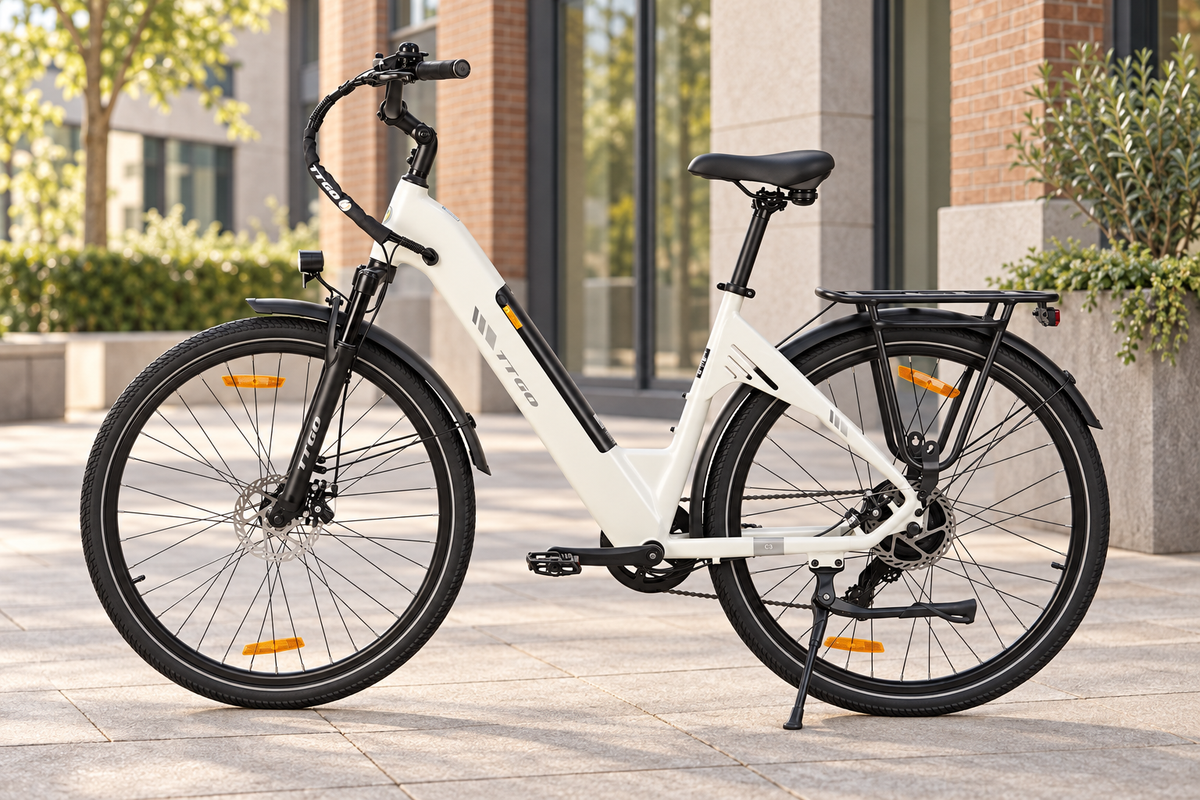
A step-through e-bike is worth considering if getting on and off easily is one of your daily priorities. But a low frame does not automatically mean a light bike, a small bike or the right fit. Before choosing one, picture the whole journey: leaving storage, joining traffic, stopping, parking and getting the bike home again.
This guide helps you decide whether that frame style fits your routine. It is written by TTGO and uses the C3 SE as a product example, rather than an independent road-test verdict.
What does “step-through” actually change?
A step-through frame leaves an open, lower space in front of the saddle, so you can pass your leg through that opening instead of swinging it over a high top tube. “Low-step” and “step-thru” are other names you may encounter. The defining benefit is easier access to the bike; it is not a promise about speed, range or comfort for every rider. Gazelle’s explanation of step-through frames describes this same basic distinction.
For a commute with several stops, or a day that combines work and shopping, think about how often you completely dismount. That is where the frame opening may matter more than it does on a continuous ride.
Four checks before you choose

1. Try the movements you make every day
When trying a bike, wear the shoes and clothing you expect to commute in. On level ground, check whether you can mount, dismount and stand beside it comfortably. Keep loose clothing clear of moving parts. If possible, repeat the exercise with the bag arrangement you intend to use.
Also wheel the bike through a doorway and turn it around in a confined space. A pleasant first impression while seated does not tell you how manageable it will be at your building’s entrance.
2. Check fit separately from frame access
Being able to step into the frame is only the beginning. You still need an appropriate saddle position, a comfortable reach to the handlebars and controls you can operate confidently. Do not buy from the “step-through” label alone.
Compare the manufacturer’s size guidance with your measurements, and arrange a fitting or test ride where possible. If you are between sizes or unsure about reaching the ground when stopping, ask for advice about that specific model rather than assuming every low-step bike will fit.
3. Plan storage before comparing range figures
Write down every place you will move the bike without riding it: stairs at home, a narrow corridor, a cellar ramp or a workplace bike room. Measure awkward access points and check the bike’s actual weight and dimensions.
A low opening does not make a full-size bicycle foldable. If your route includes a train, check the operator’s bicycle rules separately. If daily lifting is unavoidable, being able to handle the bike safely may be a more useful selection criterion than a larger advertised battery.
4. Decide how you will carry your belongings
List the items you actually take: a laptop, work clothes, a lock and perhaps groceries. Check whether your chosen bag fits the intended rack and leaves adequate clearance. Confirm the rack and bicycle load limits before adding accessories.
A rear rack is not automatic approval for a child seat, passenger or any particular luggage system. Ask about the exact accessory and mounting arrangement. The same applies to car carriers and storage mounts: confirm compatibility with the bike’s frame and weight.

A quick decision table
| Your everyday situation | What to check |
|---|---|
| You frequently get off to park, shop or open gates | Try the low frame opening and handling at walking pace. |
| You carry a work bag on the rear rack | Practise mounting with that setup and verify accessory compatibility. |
| You store the bike upstairs | Prioritise safe handling, weight and access before frame style. |
| You prefer a particular riding posture | Test reach and adjustment; do not infer posture from frame shape alone. |
| You need a bike for specialist off-road riding or heavy cargo | Choose a model expressly intended and rated for that use. |
Make this list specific to your journey. A ground-floor bike room and a short paved route present different practical questions from a third-floor flat and a trip that includes public transport.
Where the TTGO C3 SE fits into the decision

If you are considering a full-size city e-bike with this frame layout, the TTGO C3 SE in White is one option to investigate. Its product page lists Shimano 7-speed gearing, 28 × 2.0-inch tyres and a bicycle weight of 26 kg. Those are manufacturer-listed specifications, not measurements from an independent test.
The weight makes the storage check especially relevant: decide whether your route requires carrying the bike, and do not equate a low frame with easy lifting. Compare the size information with your needs and check the current product page for available colours before ordering. This guide does not establish compatibility with a particular child seat or luggage carrier.
For the wider purchase decision, our European e-bike buying guide covers the broader factors to compare. If your main concern is battery care after purchase, see our e-bike battery care guide.
Questions to settle before ordering
Are step-through e-bikes only for women?
No. Treat frame access as a practical choice. Choose according to how the bike fits you and how you use it, rather than a gender label.
Does a step-through frame mean the bike will fit a shorter rider?
Not necessarily. The frame opening, saddle adjustment and handlebar reach are different measurements. Check the exact model’s size guidance.
Can I use a step-through e-bike for a longer commute?
Frame access alone cannot answer that. Assess your route, fit and charging arrangements, then check the model’s specifications and any stated conditions behind its range estimate. Do not use frame shape as a substitute for those checks.
Make the choice around your routine
A useful next step is to make a short checklist: comfortable mounting, appropriate fit, manageable storage and a compatible luggage setup. If the bike passes those checks, compare its equipment and support options. If it fails a daily handling requirement, keep looking even if the specification sheet seems attractive.
Explore the TTGO C3 SE’s current specifications and available options.
Product information checked on 21 September 2026. Images include original TTGO product photography and AI-generated illustrative scenes and graphics. Generic accessories shown are planning examples.
Share:
Best E-Bikes in Europe 2026: TTGO vs Gazelle, Decathlon & More