
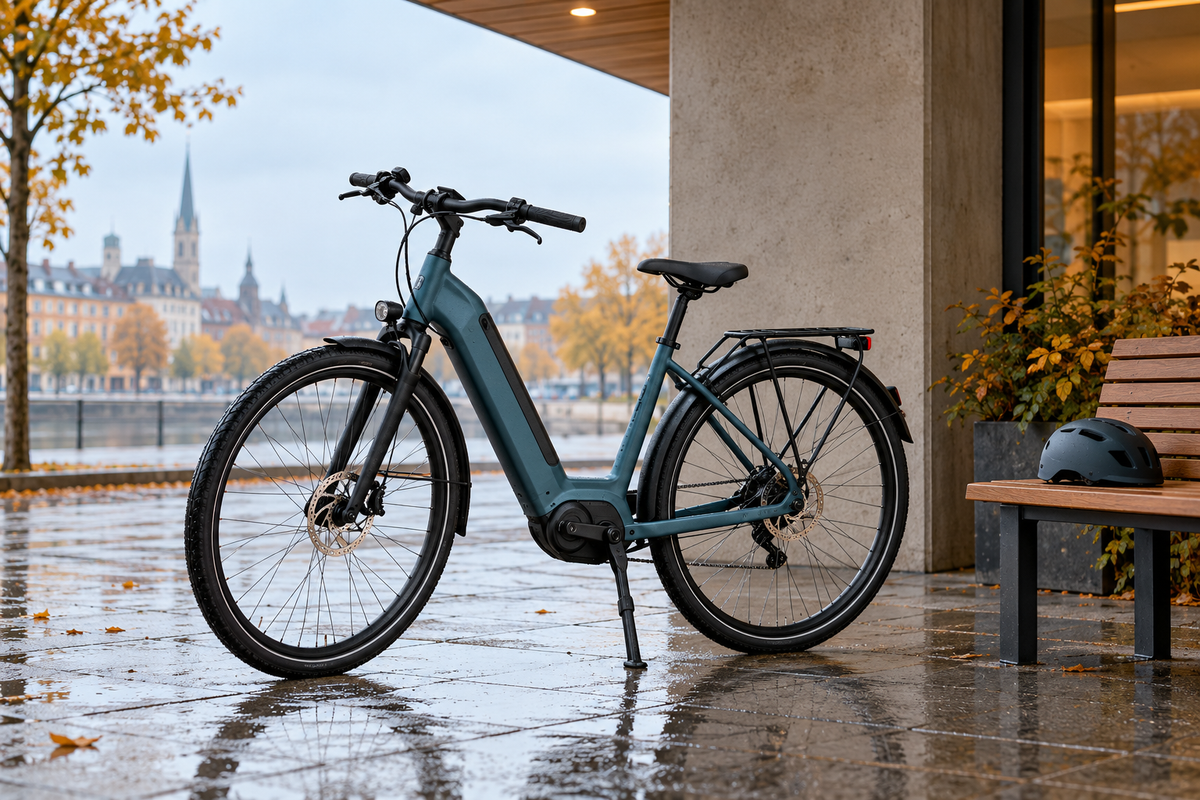
You finish a wet commute and hear a sharp squeal the next time you use the brakes. It is tempting to blame the rain, spray something on the disc or ride until the sound disappears. None of those reactions tells you whether the brakes are working correctly.
Water can temporarily make disc brakes noisier, but sound alone cannot identify the cause or confirm that the bicycle is safe to ride. Pay attention to braking performance, lever feel, visible damage and when the noise occurs. Weak or unreliable braking, leakage or damaged parts call for stopping and professional inspection, not another test ride.
Why rain can change the sound
MAGURA's disc-brake noise guide explains that braking creates vibrations and that squealing can become more frequent or stronger in wet conditions. It generally decreases as water leaves the rotor during braking. That is an explanation of a possible temporary effect, not an instruction to heat the brakes deliberately.
The timing is useful evidence. A noise that began in rain and later disappeared is a different observation from one that continues in dry conditions. Neither observation, by itself, identifies contamination, wear or a fault. There is no universal number of stops or minutes after which a noisy brake becomes acceptable.

Check for reasons to stop riding first
Before investigating the noise, consider whether anything about stopping the bike has changed. If you are already riding and braking becomes unreliable, stop as safely as circumstances allow. Do not continue a commute to see whether the sound improves.
The SHIMANO hydraulic disc-brake user manual warns against using brakes with leaking oil or cracked or deformed rotors. It also warns that oil or grease on pads and rotors can prevent correct operation. Those are safety issues rather than cosmetic noise complaints.
Other reasons to pause and seek inspection include a marked loss of braking power, a sudden change in lever feel, severe vibration or persistent grinding. A lever that now travels unusually far deserves attention. Trek's pre-ride brake check includes checking, while stationary, that the lever does not reach the handlebar before sufficient braking force is available.
A stationary check is not a certificate of roadworthiness. If you are unsure about the result, ask the seller or a qualified bicycle workshop before using the bike again. Do not rely on the other brake to complete the trip.

Describe the pattern without taking anything apart
Once the bike is safely parked, write down what you have already noticed. You do not need to reproduce an alarming sound or remove a wheel to make a useful report. Keep fingers away from moving rotors, and allow recently used brake parts to cool before approaching them.
| Observation | Useful detail to record |
|---|---|
| When it began | During rain, after washing, after transport or after recent service. |
| When it occurs | While applying a brake, while rolling without braking, or both. |
| Where it seems to come from | Front, rear or uncertain. Do not turn a guess into a diagnosis. |
| Other changes | Lever feel, stopping response, vibration or visible fluid. |
| Recent products used | The exact cleaner, lubricant or spray, if any, and where it was applied. |
Use ordinary descriptions: “a brief squeal when I apply the rear brake after rain” is more useful than declaring that the pads are ruined. If the sound happens without braking, say so. MAGURA distinguishes braking noises from rubbing or grinding during rolling, and notes that alignment or other components can be involved.
Why persistent noise needs more than a guess
MAGURA also identifies worn pads or rotors, glazed pads and play in other bicycle components as possible contributors to noise. Several conditions can produce similar sounds. A recording cannot measure pad wear, establish correct alignment or rule out a leak.
If the noise persists after the bike has dried, returns repeatedly or follows an impact, arrange an inspection before relying on the bicycle for the next journey. Drying is not a repair for contaminated or damaged parts. Tell the workshop whether any work was done shortly before the change, even if it seemed unrelated.
Keep oils and improvised treatments away
Do not put chain lubricant, anti-rust oil or an unknown silencing product on the rotor or pads. A brake needs the intended friction surfaces to work correctly; making a sound quieter is not the same as restoring braking performance.
Cleaning instructions depend on the actual brake system. SHIMANO's cited manual cautions against commercial brake cleaners and silencing agents that can damage seals. This is a reason to find the correct instructions, not to substitute another household chemical. If contamination is suspected, tell the workshop what touched the brakes.
Do not sand or bake pads, bend a rotor, loosen a caliper or attempt bleeding based on a generic noise guide. Equally, avoid repeated high-speed stops or a steep descent to “burn off” water or residue. Replacement and bedding-in instructions belong to the identified component system.

Identify the bike, then identify its brakes
The TTGO C7 SE in Light Yellow is described by TTGO as having hydraulic disc brakes. That description identifies a brake type, not its exact manufacturer, model, compatible pads or service procedure. A photograph of the complete bike cannot supply those missing details.

If you own this model, give TTGO support the version and purchase details, your observations and clear photographs of safely visible markings. Ask which brake documentation and service route apply to your bicycle. Our support-request guide explains how to organise the rest of the information.
Photographs should be taken with the bicycle stable and stationary. Do not hold a phone while riding to capture the squeal. A workshop can decide what further checks are needed; your job is to describe the change accurately.
Rain still matters after the noise is resolved
Trek's owner guidance notes that wet conditions reduce tyre grip and increase stopping distance. Even after a brake issue has been checked, allow more room and slow earlier with smooth inputs. Quiet brakes do not restore dry-road grip.
Before returning to normal use, resolve any uncertainty about brake function and follow the instructions provided for your system. Keep the distinction clear: a wet-weather sound is an observation; dependable braking is the requirement.
Information checked 2 November 2026. This guide supports safe observation and professional assessment, not diagnosis or a universal repair procedure. Generated illustrations are explanatory; the TTGO product photograph is not evidence of a brake fault or a tested repair.
Share:
What Does an E-Bike Weight Limit Include?